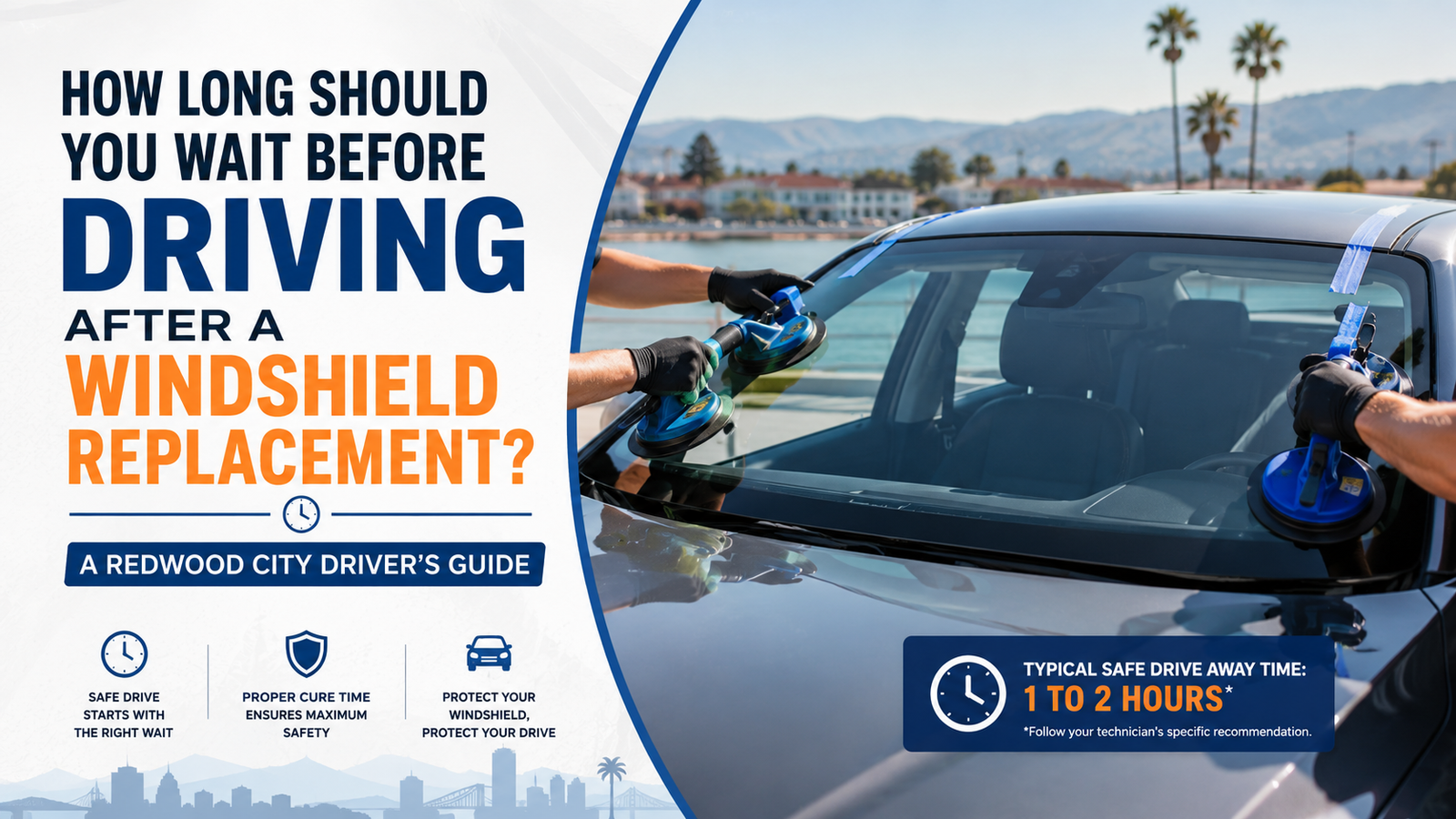
You’ve just had your windshield replaced. The technician has packed up their tools, your car looks great, and you’re ready to get back on the road. But before you turn the key, there’s one question that every Redwood City driver should know the answer to: how long do you actually need to wait before driving?
This is one of the most frequently asked questions about Windshield Replacement Redwood City, and the answer is more nuanced than most people realize. It’s not just about the glass it’s about the adhesive that holds it in place, the weather conditions on the Peninsula, the advanced safety systems in your vehicle, and a handful of care steps that protect your new installation in the hours and days that follow. This guide walks through everything Redwood City drivers need to know to protect their investment and their safety after a windshield replacement.
What Actually Holds a Windshield in Place?
Before understanding why waiting matters, it helps to understand what’s happening beneath the surface of a newly installed windshield. Your windshield is not simply resting in a rubber gasket in modern vehicles, it is bonded directly to the car’s body structure using a urethane adhesive. This urethane is applied in a continuous bead around the perimeter of the windshield opening, and when the new glass is pressed into place, that adhesive forms the structural connection between the glass and the vehicle frame.
That connection is critical for reasons that go far beyond keeping rain out of the cabin. The windshield contributes meaningfully to the structural rigidity of the passenger compartment in the event of a collision. In rollover accidents, a properly bonded windshield prevents the roof from collapsing inward. In front-impact crashes, the windshield acts as the backstop for front-passenger airbag deployment the airbag inflates outward, hits the windshield, and rebounds to cushion the occupant. If the windshield is not properly bonded, it can fail in either of these scenarios, dramatically increasing injury risk.
This is why the urethane adhesive needs adequate time to cure before the vehicle is driven. An adhesive that has not reached sufficient strength cannot perform these structural functions under crash loads.
What Is Safe Drive-Away Time (SDAT)?
The auto glass industry uses a specific term for the minimum time that should pass between windshield installation and when you first drive the car: Safe Drive-Away Time, or SDAT. SDAT refers to the point at which the urethane adhesive has cured enough to hold the glass securely under normal driving conditions. It does not mean the adhesive is fully cured full cure takes considerably longer but it does mean the bond has enough initial strength for routine driving.
For most modern fast-cure urethane adhesives, SDAT falls in the range of 30 minutes to one hour under normal temperature and humidity conditions. Standard-cure urethane adhesives may require longer two to four hours or more. Your auto glass technician should be able to tell you exactly which adhesive was used and what the manufacturer-specified SDAT is for that product under the conditions at the time of your installation.
It’s important to understand that SDAT is a minimum threshold, not a recommendation for ideal performance. Even after SDAT has been reached, the adhesive continues to cure and gain strength for the next 24 to 48 hours. This is why technicians often recommend avoiding automatic car washes, highway speeds, and rough road conditions during the first 24 hours after a replacement not because the windshield will fall out, but because these conditions put additional stress on a bond that is still in the process of reaching full strength.
How Redwood City’s Climate Affects Curing
If you’re in Redwood City, you’re in a part of the Bay Area where temperatures and humidity vary meaningfully across the day. Morning marine layer and fog rolling in from the Bay, cool nights even in summer, and warm afternoons that can stretch into the 70s and 80s during the dry season this temperature variability is relevant to your windshield installation.
Urethane adhesives cure faster in warmer, drier conditions and slower in cooler or more humid conditions. The chemical curing process that builds adhesive strength is temperature-dependent lower temperatures slow the reaction. A windshield installed early on a cool Redwood City morning, when temperatures might still be in the upper 50s or low 60s, will take longer to reach SDAT than one installed on a warm afternoon.
Experienced auto glass technicians who work the Peninsula account for these conditions. In cooler weather, a quality technician may use adhesives specifically formulated for lower-temperature curing, or they may recommend a longer wait before you drive. During the warm dry months of late summer and fall when Redwood City can see afternoon temperatures in the 80s standard adhesives may cure toward the faster end of the specified range.
Rain is another consideration. While rain on the outside of the glass once the adhesive has sealed is generally not a problem, heavy rain during installation can interfere with adhesive application and curing. Reputable mobile auto glass services in Redwood City will either work in a covered location or reschedule if precipitation is actively occurring at the time of installation.
The Post-Replacement Wait Time: What the First Hour Looks Like
In the immediate period after your windshield is installed, the most important thing is simply not to move the vehicle. The adhesive bead needs to maintain even contact with both the glass and the pinch weld the metal flange around the windshield opening without any forces being applied that could disturb the bond line. Even sitting in the car and slamming a door can create a brief pressure wave inside the cabin that could stress the freshly applied bond.
Most technicians recommend leaving a window cracked slightly about one inch during the curing period. This is because modern vehicles are surprisingly airtight, and closing a door creates a momentary pressure spike inside the cabin. With a window slightly open, that pressure has somewhere to go rather than pushing outward against the freshly bonded windshield edges. This is a small but meaningful detail that quality installers consistently mention.
After the adhesive reaches SDAT typically 30 minutes to an hour with modern fast-cure products you can drive the car under normal conditions. This means regular streets and highway speeds are generally fine. What you want to avoid during the first 24 hours includes automatic car washes (the pressurized water and mechanical brushes put stress on the seal), particularly rough roads or off-road driving, and leaving the vehicle in conditions of extreme heat such as a closed garage in summer or direct afternoon sun that could heat the glass surface to very high temperatures.
The Role of ADAS Recalibration in Your Wait Time
For many Redwood City drivers particularly those driving newer vehicles from major automakers the wait after windshield replacement involves more than just adhesive cure time. If your vehicle is equipped with a forward-facing camera mounted near the rearview mirror, that camera almost certainly needs to be recalibrated after the windshield is replaced.
Advanced Driver Assistance Systems (ADAS) including lane departure warning, lane keep assist, automatic emergency braking, forward collision warning, traffic sign recognition, and adaptive cruise control frequently rely on this windshield-mounted camera. The camera’s field of view and its relationship to the vehicle’s centerline are calibrated to precise tolerances during initial vehicle assembly. When the windshield is removed and replaced, even a millimeter of variation in the new glass’s position relative to the old can shift the camera’s effective aim enough to cause these systems to misperform.
According to industry data, nearly 9 out of 10 model-year 2023 vehicles require ADAS recalibration after windshield replacement. This proportion has risen sharply over the past decade as ADAS features have spread across vehicle lineups. Brands including Toyota, Subaru, Honda, Ford, and Tesla specifically require recalibration as a condition of maintaining the proper function of their safety systems.
ADAS recalibration can be performed through two methods: static calibration, which is done in a controlled indoor environment using precisely positioned target boards, and dynamic calibration, which involves driving the vehicle on a specific road type at a specific speed while the system auto-adjusts using sensor feedback. Some vehicles require static calibration only, some require dynamic only, and some require both sequentially. The requirements are vehicle-specific and should be confirmed with the technician performing your replacement.
A common misconception is that modern vehicles “self-calibrate” as you drive away. While some systems perform minor adaptive corrections during normal use, these are fine adjustments within a narrow tolerance band they are not a substitute for proper post-replacement calibration. A camera that is out of tolerance after windshield replacement needs to be brought back into specification first; then the vehicle’s adaptive routines can make the minor corrections they are designed to handle.
The practical implication for Redwood City drivers: if your vehicle requires ADAS recalibration, your total appointment time is longer than the windshield replacement itself. Static calibration typically adds an hour or more. This should be factored into your scheduling particularly if you’re having mobile service done at a location where a controlled indoor calibration space is not available, which may require a separate shop visit for the static calibration step.
Post-Replacement Care for the First 24 to 48 Hours
Even after SDAT has been reached and ADAS recalibration has been completed, a few straightforward care practices during the first 24 to 48 hours help ensure the best long-term outcome from your windshield replacement.
Retain the retention tape. Quality installers apply small strips of tape across the windshield edges to help hold the molding in place while the adhesive cures. Leave these in place for the time period your technician specifies typically 24 hours. They’re not decorative; they’re functional.
Avoid slamming doors. As discussed, closing doors generates a brief interior pressure spike. During the curing period, close doors gently rather than swinging them shut with force. This is especially important in the first few hours after installation.
Keep windows slightly open if possible. Leaving a rear window or a rear side window cracked slightly during the initial curing period provides the pressure relief that prevents the interior air spike from pushing against the freshly bonded windshield edges.
Skip the car wash for 48 hours. The pressurized water spray, mechanical brushes, and the temperature differential between the spray and the glass in an automated car wash all put stress on a windshield installation that is still reaching full bond strength. Wait at least 48 hours before putting the vehicle through an automatic wash. Hand-washing the body panels is fine after 24 hours as long as you avoid directing water pressure at the windshield edges.
Avoid extreme temperatures. If possible, park the vehicle in a garage or shaded area for the first 24 hours rather than leaving it in direct afternoon sun. In Redwood City’s warm dry-season afternoons, direct sun can heat the glass surface significantly, creating thermal stress on the curing adhesive.
Signs to Watch for After a Windshield Replacement
A properly installed windshield should be completely transparent, well-sealed, and tight-fitting. In the days following your replacement, a few signs are worth watching for that could indicate an installation issue worth having checked.
Wind noise or whistling around the windshield edges at highway speeds is a common indicator that the seal is not complete around the perimeter. A small gap in the adhesive or a molding that is not properly seated can allow air to pass through, creating audible noise at speed.
Water intrusion around the windshield corners during rain or a car wash is another signal that the seal may not be intact. Any water that enters the vehicle cabin through the windshield area after replacement should prompt a call to the installer.
Optical distortion a wavy or refracted appearance when looking through sections of the new glass can indicate that the glass is not meeting OEM optical standards. Quality auto glass for most vehicles should provide completely clear, undistorted vision across the full viewing area.
ADAS warning lights or behavioral changes in safety systems after windshield replacement are a strong signal that recalibration is needed or was not completed correctly. If your lane departure warning, automatic emergency braking, or forward collision alert begins behaving unexpectedly after a windshield replacement, this warrants immediate follow-up.
Mobile Windshield Replacement in Redwood City: What to Expect
One of the practical advantages of mobile windshield replacement service which has become the dominant service model for auto glass in the Peninsula area is that it eliminates the need to drive a vehicle with a compromised windshield to a shop. A cracked or chipped windshield should not be driven on for any more distance than necessary, as vibration and road stress can cause cracks to spread rapidly. Mobile service brings the technician to wherever the vehicle is parked home, workplace, or another convenient location.
For Redwood City drivers, mobile service covers all parts of the city including downtown, Redwood Shores, Emerald Hills, Woodside Plaza, Friendly Acres, and the Farm Hill area. After the replacement is complete at your location, the vehicle typically needs to remain in place for at least the SDAT period before you drive it anywhere so choose a location where you’re comfortable leaving the car for an hour or so after the technician finishes.
Mobile service is conducted to the same quality standards as shop-based replacement when performed by experienced, licensed technicians using appropriate materials. The key considerations are choosing a covered or sheltered location when possible (particularly in wet or very cold weather) and ensuring the installer accounts for current weather conditions when specifying the SDAT for your installation.
Frequently Asked Questions About Windshield Replacement in Redwood City
How long does a windshield replacement take in Redwood City? The installation itself typically takes 60 to 90 minutes. If ADAS recalibration is required, add another 30 to 90 minutes depending on your vehicle and the calibration method needed. Mobile service in Redwood City usually delivers the full replacement within a two to three-hour window including all required steps.
Can I drive right after a windshield replacement? You should wait until the adhesive reaches SDAT typically 30 minutes to one hour with modern fast-cure products before moving the vehicle. Your technician should specify the exact wait time based on the adhesive used and conditions at the time of installation.
Does California insurance cover windshield replacement? California does not have a zero-deductible glass law (unlike some other states), so your standard comprehensive deductible applies to windshield replacement claims. However, many insurers offer optional glass coverage with a reduced or waived deductible. Review your policy or contact your agent to understand your specific coverage before scheduling a replacement.
What happens if I drive too soon after a windshield replacement? Driving before the adhesive reaches adequate strength can weaken the bond between the glass and the vehicle body. This may not cause the glass to fall out immediately, but it can compromise the windshield’s ability to perform its structural and airbag-backstop functions in the event of a collision. It can also introduce stresses that cause the adhesive to cure unevenly, potentially leading to leaks or wind noise over time.
Does my new windshield need to be the same brand as the original? Not necessarily. Replacement glass comes in two categories: OEM (Original Equipment Manufacturer) glass, which is produced by or for the vehicle manufacturer, and quality aftermarket glass, which is produced by independent manufacturers to OEM specifications. Both can provide proper fit and function. For vehicles with ADAS cameras, OEM glass is generally preferred to ensure compatibility with the camera mounting and calibration specifications.